“Catherine” Embroidery Pattern
Hello my crafty buddies!
Here is the lowdown on the “Catherine” embroidery pattern which I hope will help you stitch this design easily and feel inspired to add your own personal flair to it.
Although originally I created this specifically to use on my table at Easter, the pattern can be used in any number of ways on bigger table linens, clothes or even using small individual motifs as details on napkins or other small items.
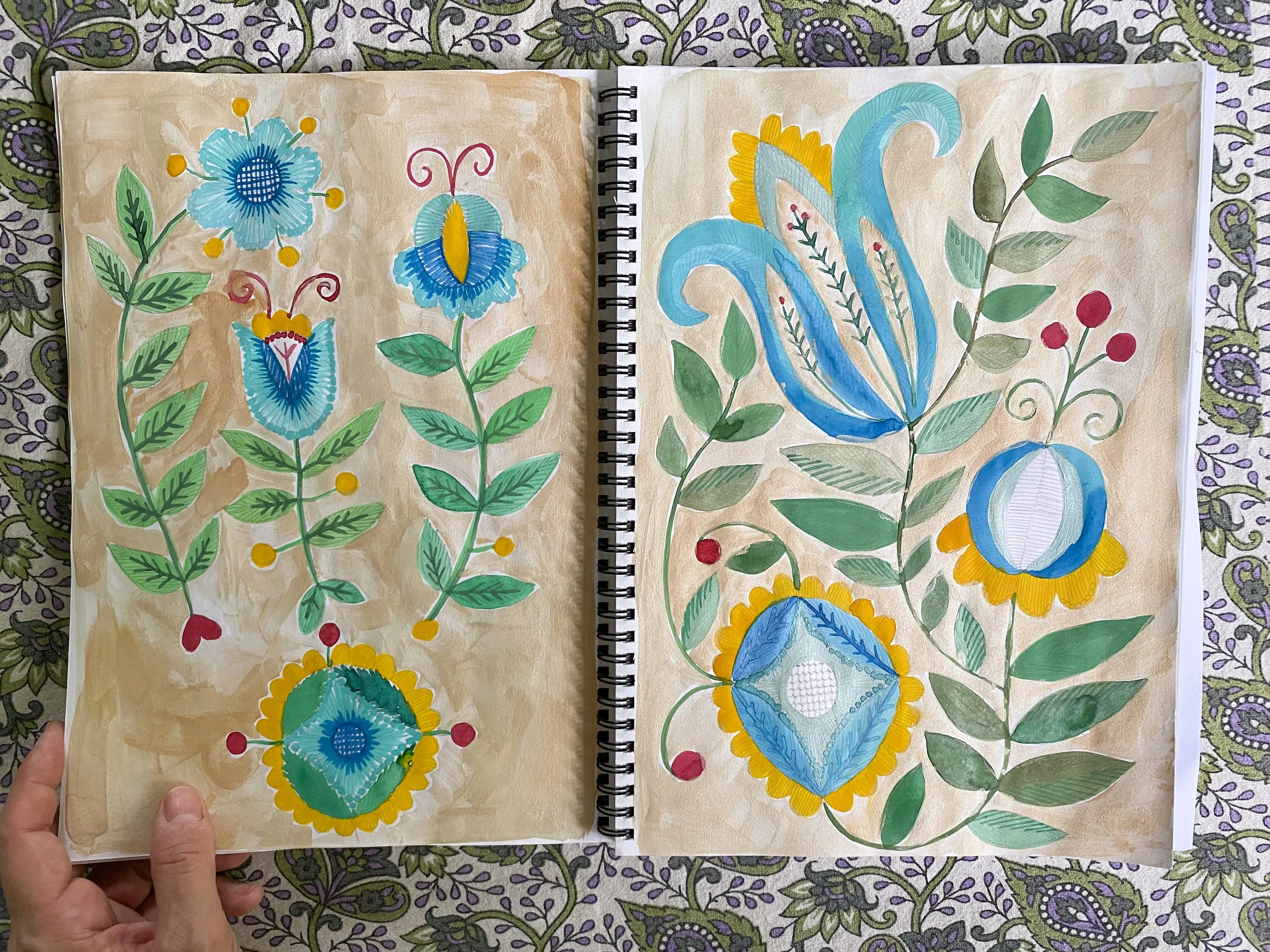
I paint quite a bit in my art books and for this design really wanted to do something in the blue and yellow colours because I love the traditional designs from the Kaszubski region in Poland.
Now I’ll be the first to admit that I’m not naturally a fan of the blue/yellow combination, still feeling scarred from the 1990’s onslaught of everything in garish blue and sandy yellow (argh!!!)
But I committed to creating something in these traditional colours that I would love. And hopefully that you would love too!
It’s one thing to paint a picture and be happy with the colours, and something else entirely to make it work as an embroidery on fabric.
I did end up working it out and only used four colours! Which for me shows great restraint.
More on the colours further on.
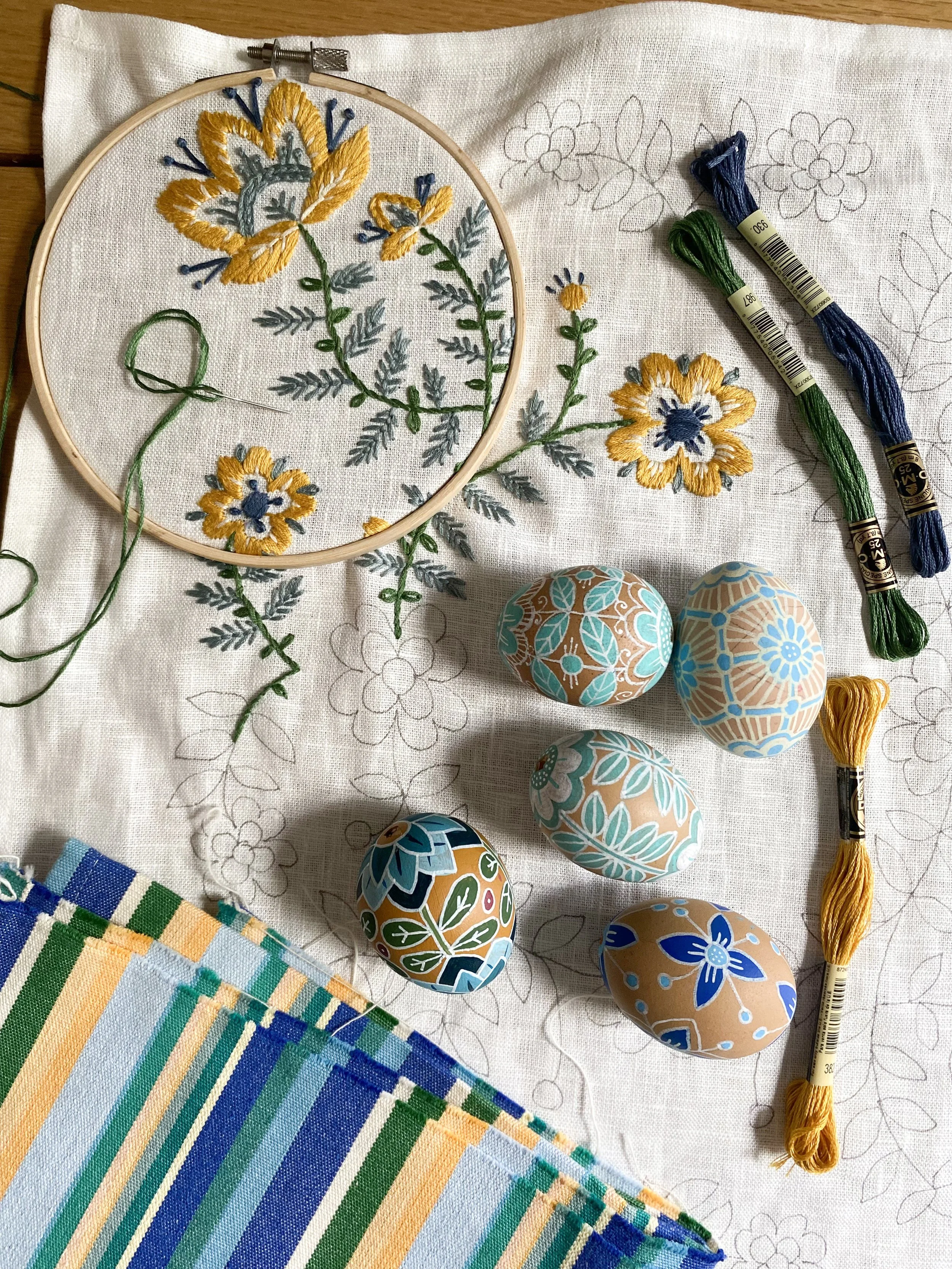
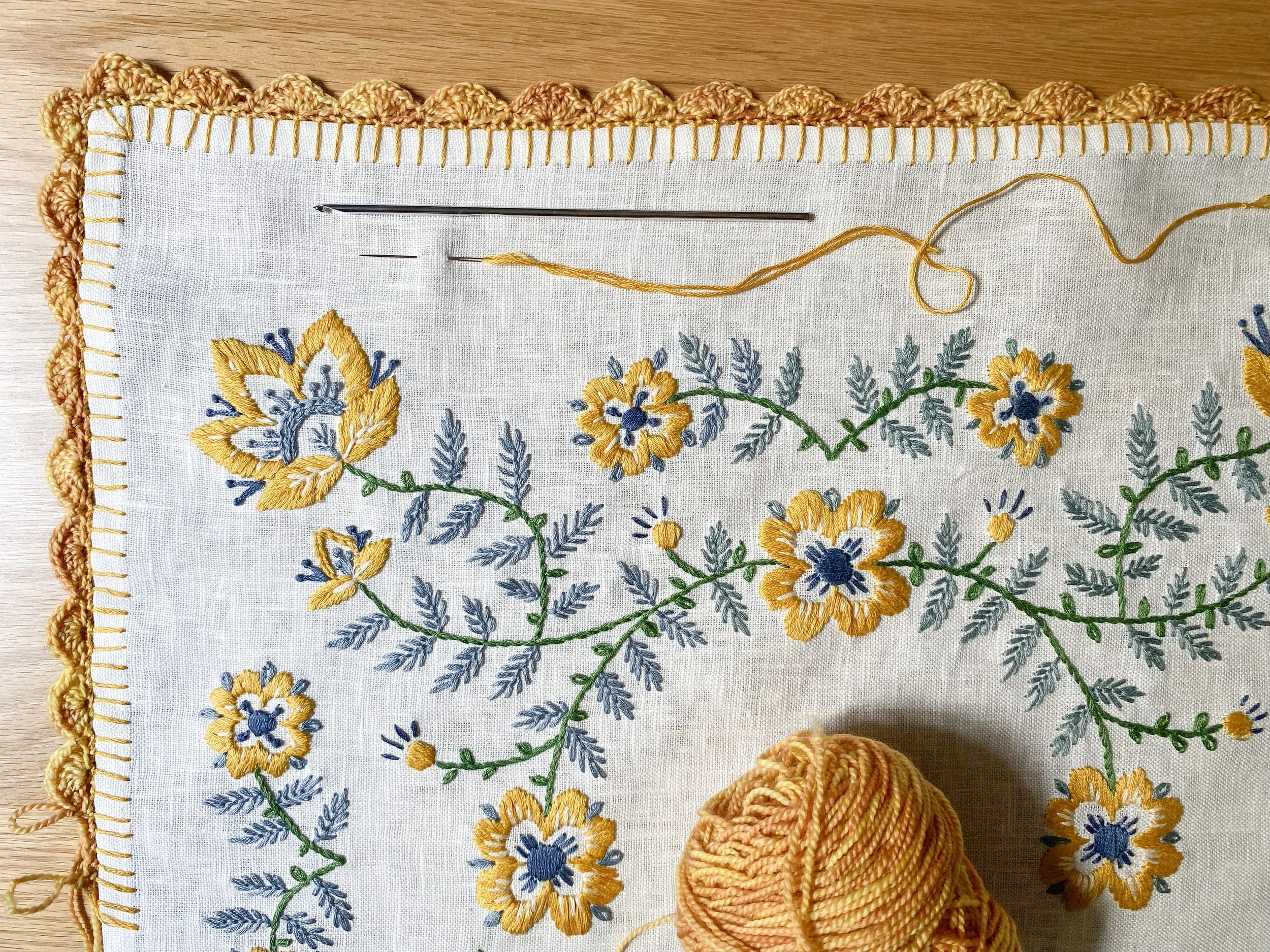
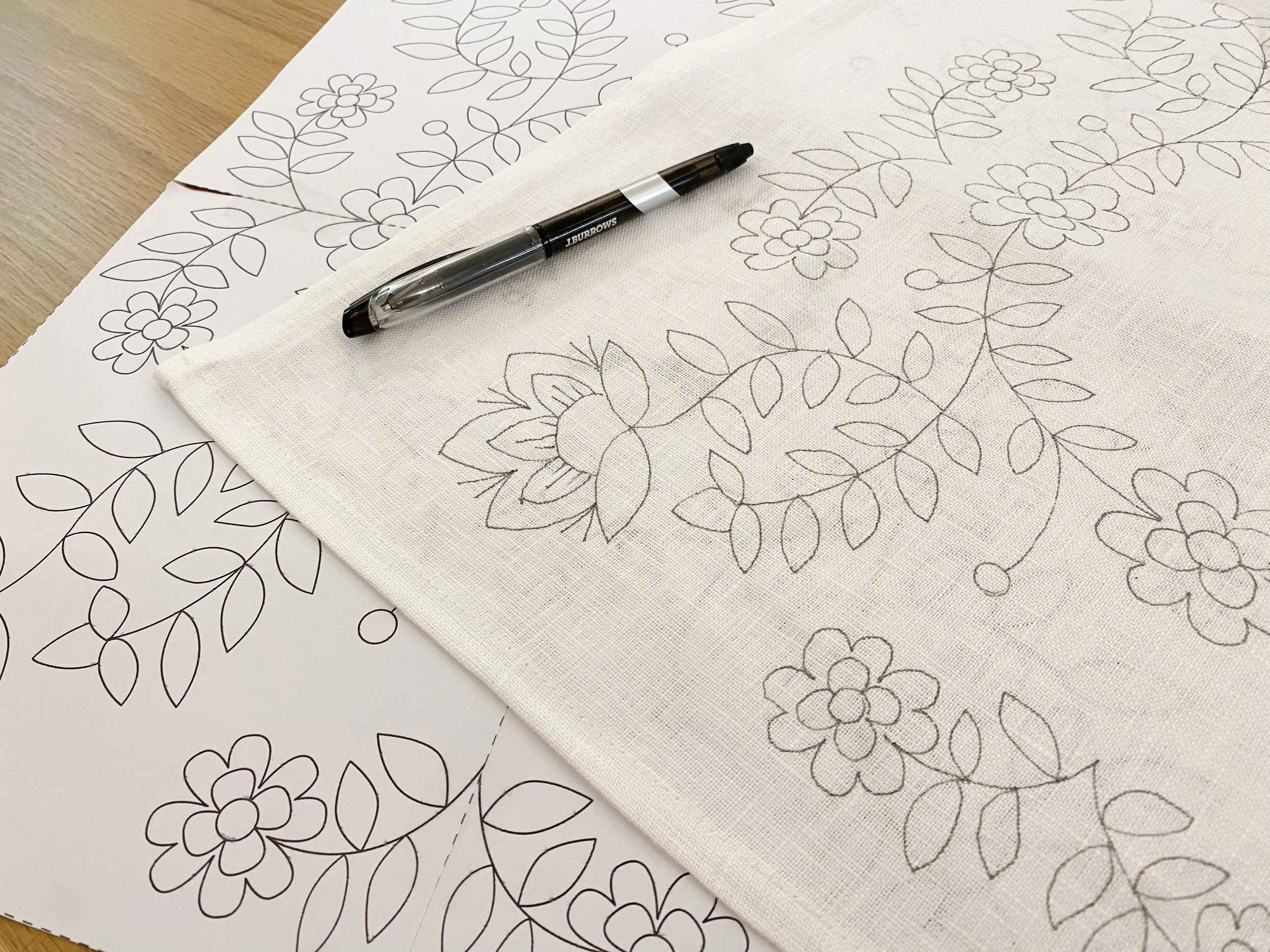
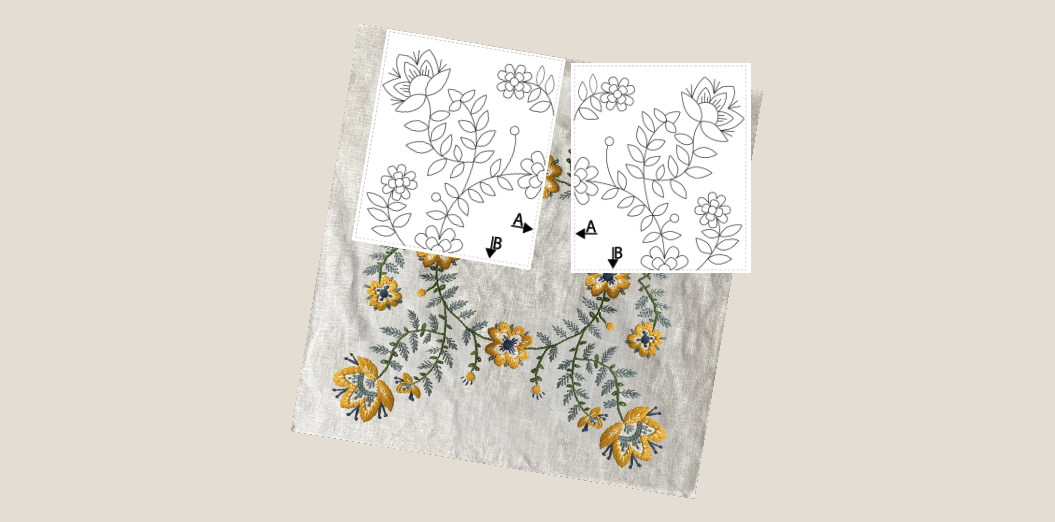
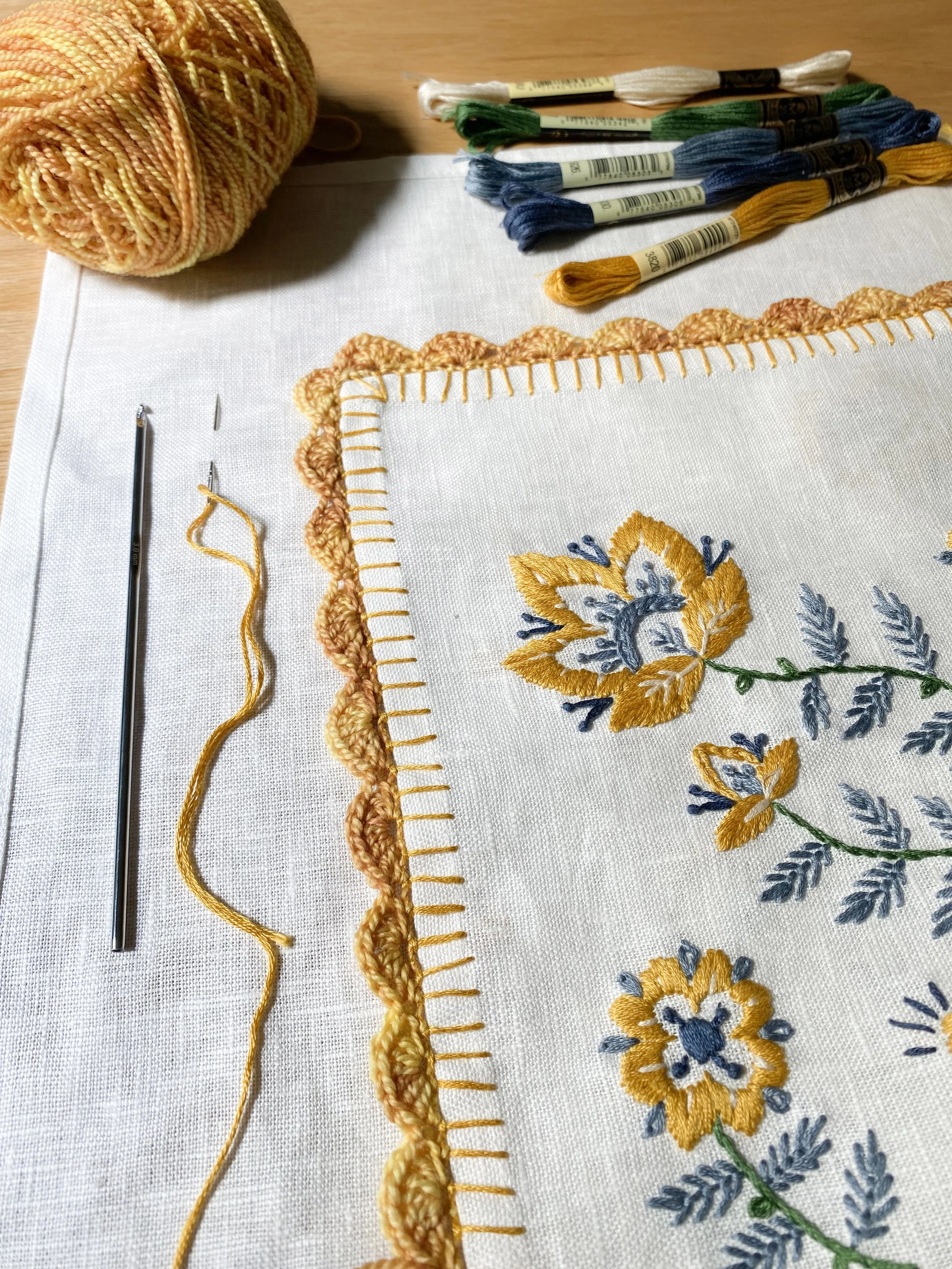
The pattern is easy to trace through a white or light coloured fabric. I used one of my square linen panels that I have in the online shop. It’s already hemmed and it was the right size to fit the whole design; 45cm x 45cm.
You can see in the photo below that it comes fairly close to the edges and if you wanted more space around the edges you’ll need a piece of about 50cm x 50cm or bigger.
Now back to the colours.
I managed to make it all work with just four colours. Originally I did all the leaves in the dark green (DMC-987) but it looked too heavy and dominant over the whole design. So I chose a pale dusty blue (DMC-926) for the big leaves and added little lazy daisies in the dark green.
I was happy with just using the one yellow (DMC-3820) although if you wanted a little bit more variation you could easily add another two yellows from the same family; DMC-3822 & DMC-3823).
The little white highlights over the yellow petals are done in DMC ecru.
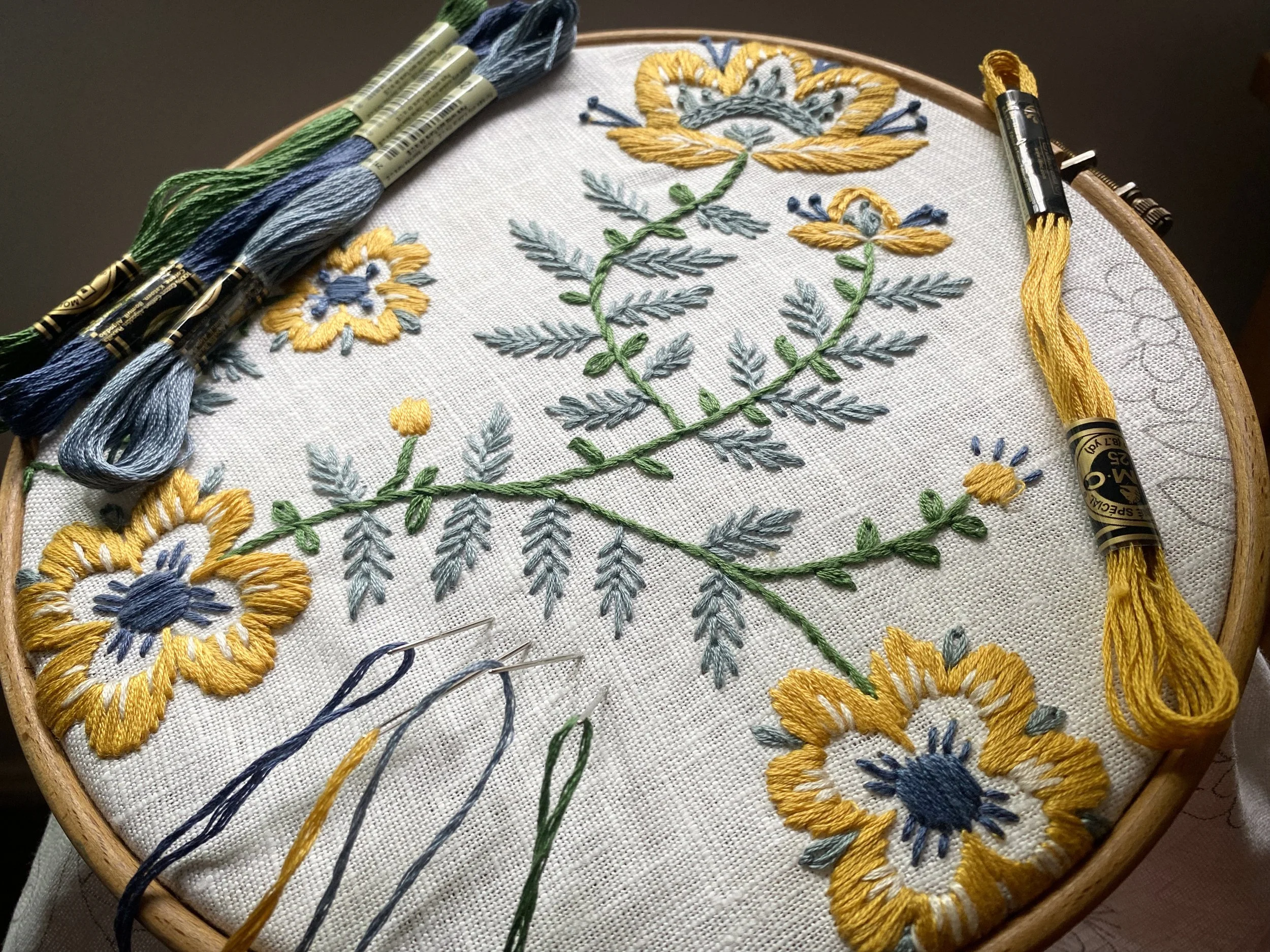
All the stitches in this design are fairly standard.
I personally have a pretty repetitive selection of stitches that I use again and again. This pattern has the following:
Satin stitch
Stem stitch
Lazy daisy
Pistil stitch
Fly stitch
Chain stitch
That’s it!
Not I know that some of you run a mile when you see the satin stitch featured in a pattern.
Deep breaths. I got you!
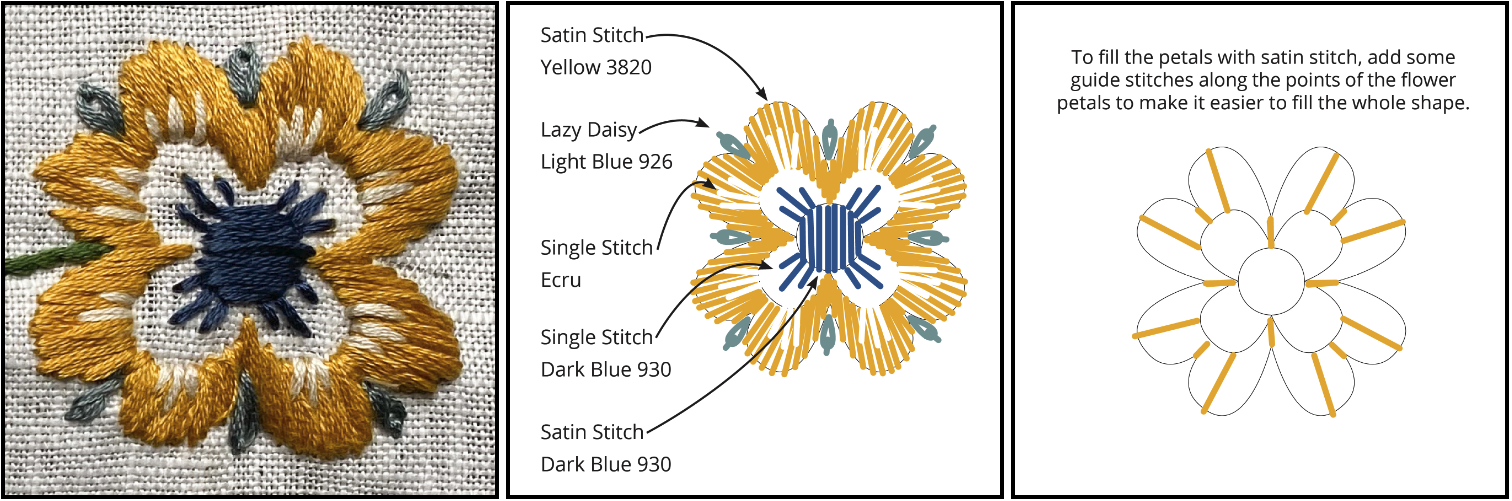
The instructions that come with the Catherine PDF give you a lot of guidence for the satin stitched parts of this pattern.
Below is an example showing you how i filled one of the flowers by first adding some guide stitches to break up the spaces.
I made a short video showing you how to do this.
And now for the finale!
Can crochet. Will crochet.
I really wanted this to feel like a charming, happy, naive, grandma style table topper. Like the kind I remember from small village houses in my home in Poland.
Grandmas love to make doilies don’t they? Yes they do, so that’s what I’m channeling.
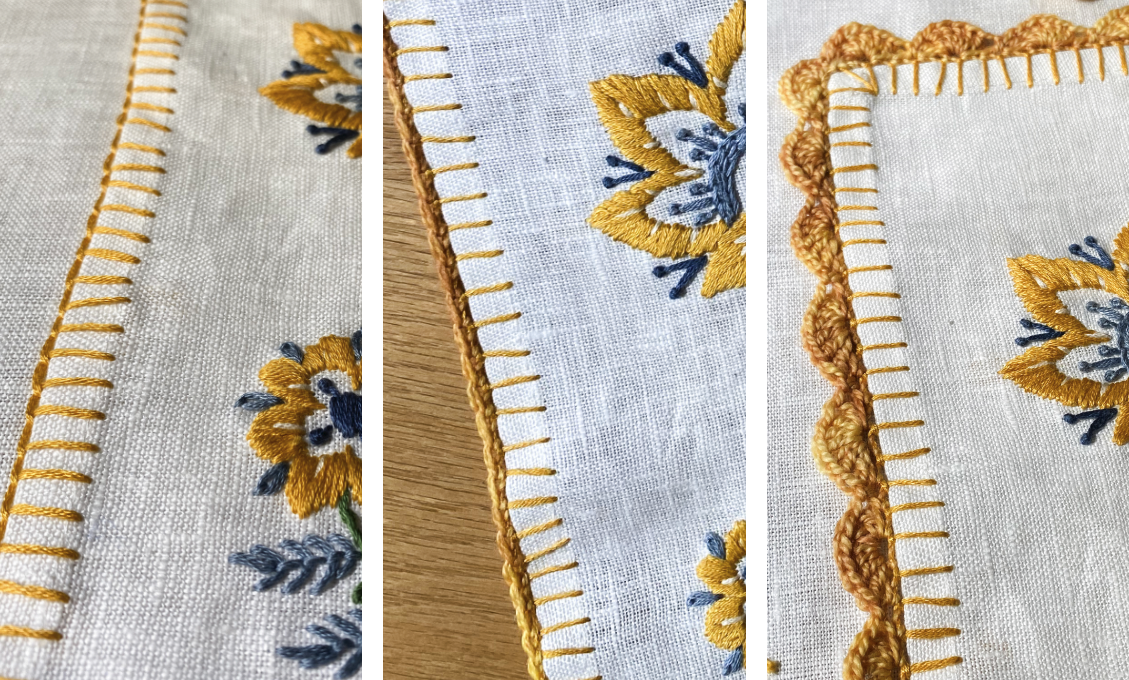
Below are the three steps I took for my “grandma” finish.
Add blanket stitch in embroidery cotton.
Attach row of single crochet to blanket stitch.
Attach scallops to row of single crochets.
My crochet skills are super basic so I will not be doing any “teaching” for this part. But I did make a two minute video of each of the steps.
Just lower your expectations…
my fingers fumble with the crochet hook but I think the result is quite charming.
Are you ready to stitch your own?
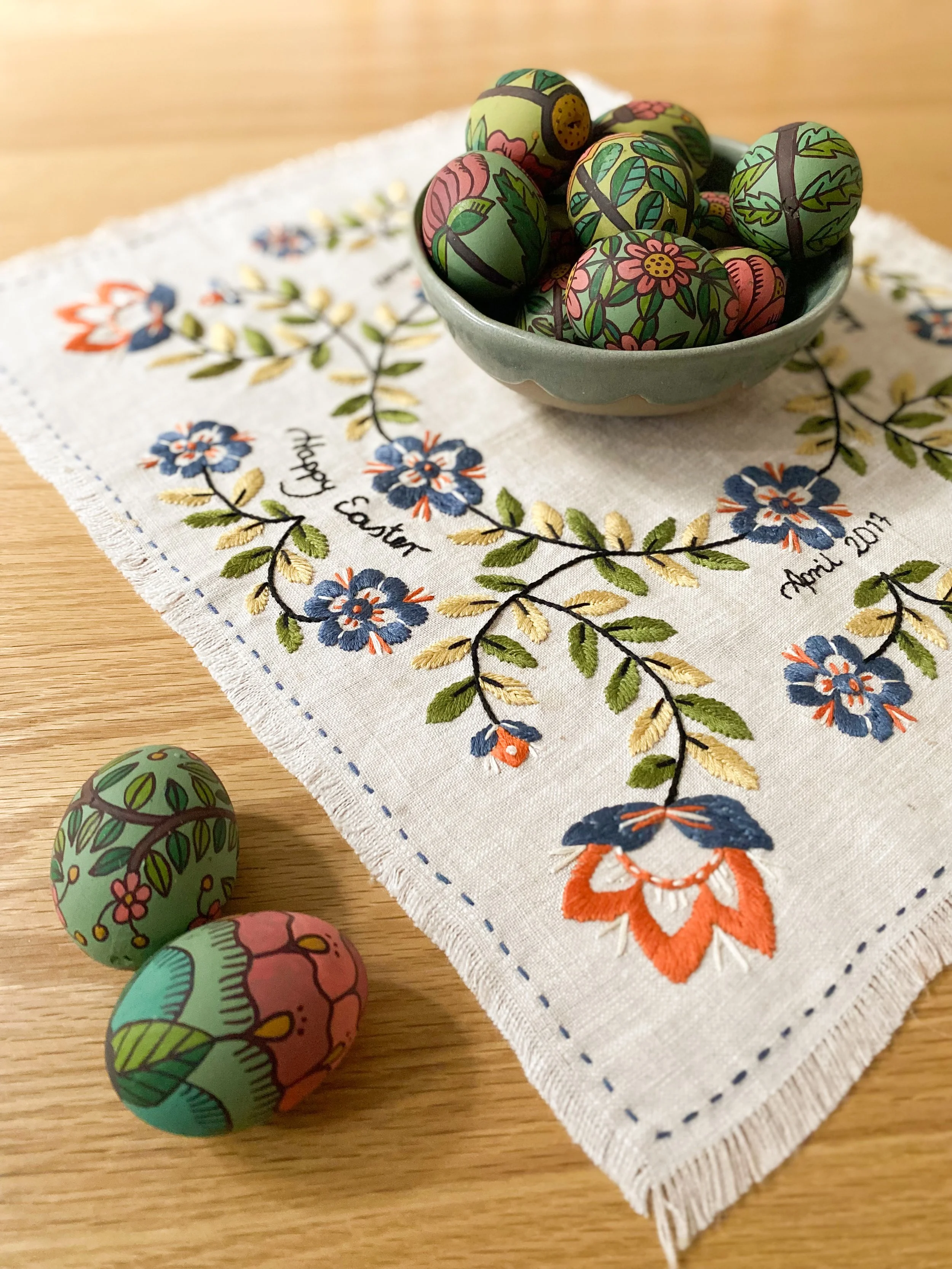
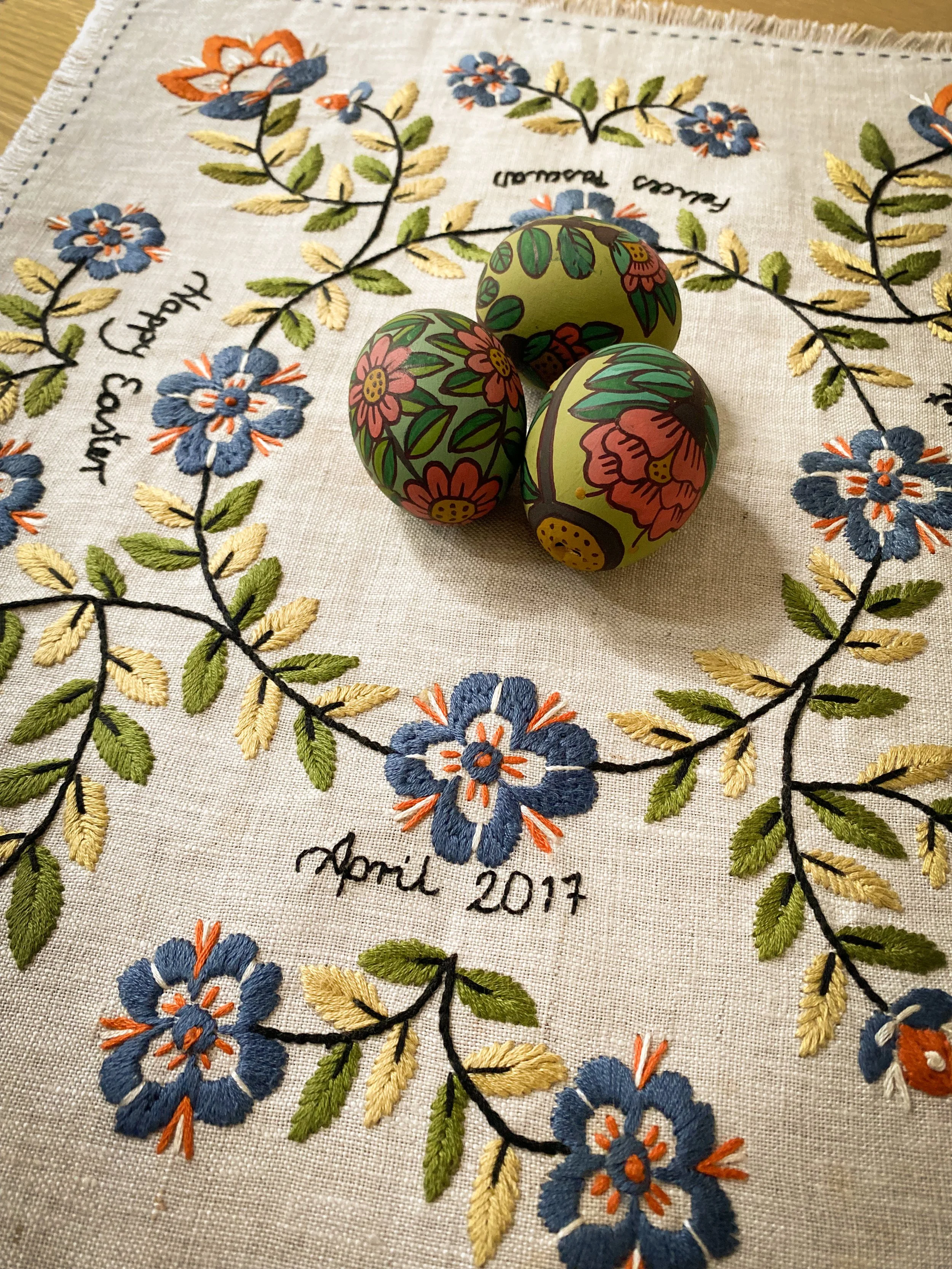
I couldn’t leave this story of the “Catherine” pattern without acknowledging the input that a 2017 embroidery had.
Nine years ago I stitched this same design in different colours and different stitches. I did it for Easter as well, leaving a round space in the middle of the table topper for a bowl or basket of Easter eggs.
I also added the words “Happy Easter” in our three languages spoken at home; English, Polish and Spanish. Johnny (my partner) is from South America and speaks Spanish.